Fix a Wet Basement Before You Finish It
Got a damp basement? Learn the common moisture causes, waterproofing and drainage fixes, and why water must be solved before finishing — plus radon notes.
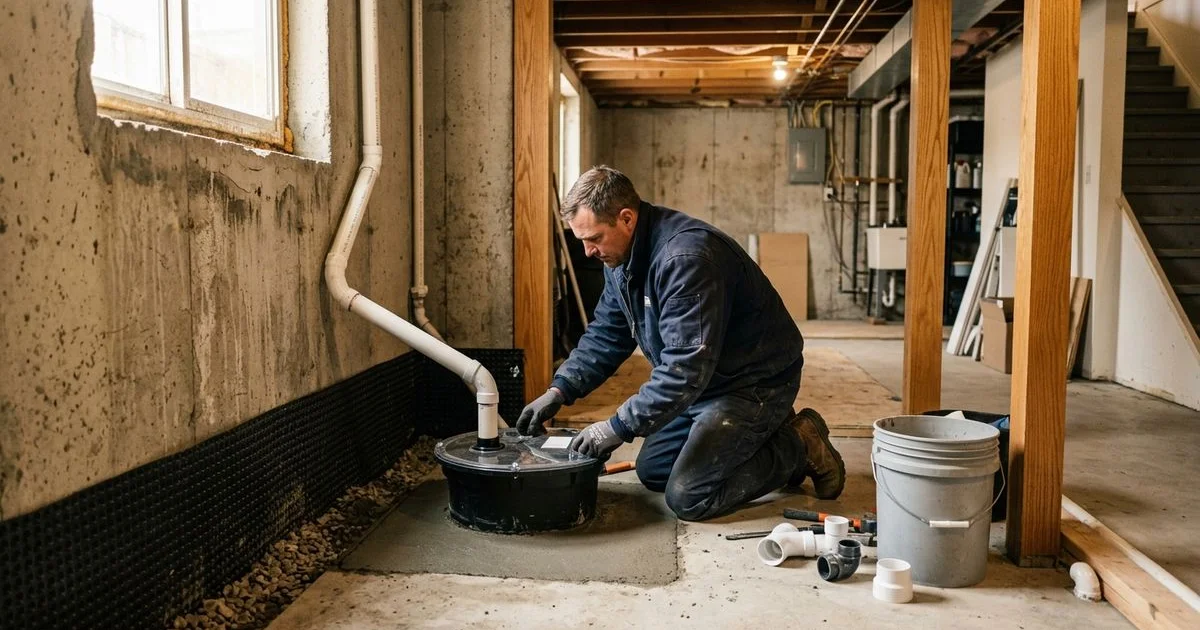
From what I’ve seen in the field, ignoring a minor foundation leak is the fastest way to ruin a remodel.
We evaluate countless basements across the Denver metro, and the math is unforgiving. Current 2026 data shows that the cost to finish a basement in Arvada typically runs between $45 and $100 per square foot.
Hiding damp walls behind new framing is a guaranteed way to throw a $40,000 investment right down the drain.
Our crews at Arvada Remodeling Pros have torn out too many recently built rooms because someone ignored the water first. Finishing materials like drywall and carpet simply cannot handle moisture.
Mold takes hold in just a few months.
We consider a dry foundation a non-negotiable requirement for every single basement finishing project on the schedule. Providing reliable wet basement solutions Arvada homeowners can trust is a core part of our process.
Let’s break down the common sources of water in the Front Range and look at the real costs of fixing them.
The common moisture sources in Front Range basements
Arvada basements typically get wet from a small number of predictable sources. Identifying the exact entry point is always the first step in choosing the right fix.
Our team starts every evaluation by looking closely at the soil composition and exterior drainage. The Front Range features highly expansive soils packed with bentonite clay. This clay absorbs water like a sponge and puts massive pressure on concrete walls.
1. Surface water and grading
We often find that surface water is the biggest culprit behind a wet floor. Gutters, downspouts, and the lot itself can easily drain toward the foundation rather than away from it.
This is usually the cheapest fix for a homeowner. Our preferred solution involves three simple steps to direct water away:
- Extending downspouts at least five feet.
- Regrading the surrounding soil with a positive slope.
- Adding a simple surface swale for heavy runoff.
2. Hydrostatic pressure
Groundwater pushing against the foundation wall from below grade creates intense hydrostatic pressure. We see this problem peak during the spring snowmelt and after heavy summer rains. The moisture forces its way through the concrete pores and joints.
Fixing this requires a pressure relief system. Our standard approach uses perimeter interior French drains and high-capacity sump pumps to redirect the water. Exterior waterproofing may also be necessary in extreme cases.
3. Cracked foundation walls
Concrete and block foundations naturally crack over time. We encounter this frequently in expansive-soil zones like Arvada, Westminster, and Lakewood.
“Bentonite clay expands up to ten percent by volume when wet, which creates enough force to snap solid concrete.”
Small, non-structural fissures are fixed with epoxy or polyurethane injection from the inside. Our heavy-duty repairs involve excavation and exterior sealing for severe, active leaks.
4. Failing window wells
Window wells act like giant buckets during heavy rain storms. The wells quickly fill with water when the interior drain is clogged or missing.
We typically fix this by adding new well drains tied directly into the perimeter system. Routing the drain to daylight is another highly effective option.
5. Condensation and humidity
Condensation is not actual water intrusion, but it creates a serious humidity problem. We frequently spot cold-water lines, foundation walls, or HVAC equipment sweating in a damp space.
A high-capacity dehumidifier is the standard remedy here. Addressing the root sources is also required before hanging drywall:
- Uninsulated cold-water pipes
- Sweating HVAC equipment
- Damp, exposed concrete walls
The fixes, by severity
Matching the right repair to the specific moisture level saves time and money. Overbuilding a solution drains your budget, while underbuilding guarantees future damage.
We always align the mitigation strategy directly with the severity of the intrusion.
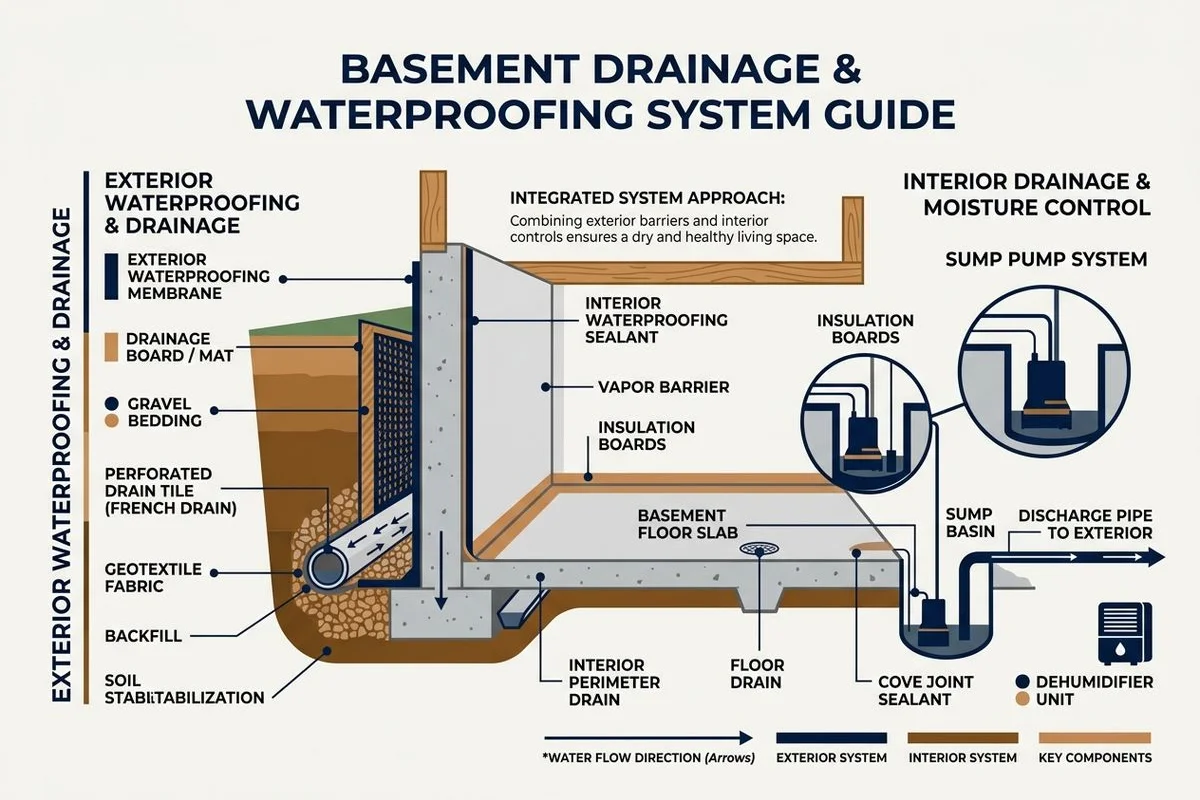
Current 2025 pricing data for the Denver metro area highlights the cost differences between these options. The table below outlines the standard baseline costs for each approach.
| Moisture Severity | Recommended Solution | Estimated Cost Range |
|---|---|---|
| Light Condensation | Extend downspouts, regrade soil, install dehumidifier. | Under $1,500 |
| Occasional Seepage | Interior perimeter drain tile (French drain) with sump pump. | $4,000 - $7,000 |
| Persistent Pressure | Interior drain tile, dual pumps, and exterior membrane. | $10,000 - $25,000 |
| Cracked Walls | Interior crack injection or exterior excavation repair. | $500 - $1,200 per crack |
We find that an interior French drain system with a sump pump is the most common middle-ground fix. When installing basement waterproofing Arvada residents depend on, a basic interior drain tile setup averages between $4,000 and $7,000. Severe cases requiring exterior excavation and a panel membrane easily climb toward $20,000.
Our experts recommend evaluating failing structural elements with a licensed structural engineer before scoping any repairs. Foundation settling or bowing walls require specialized solutions that vary widely in price.
The radon conversation
Arvada and most of the Front Range sit on geology that produces high levels of radon. This colorless, odorless radioactive gas is the leading cause of lung cancer among non-smokers.
We take this risk seriously because recent 2025 health data shows about 46 percent of Colorado homes test above the safety threshold. The EPA strongly recommends mitigation at levels equal to or above 4 pCi/L. Most local homes test somewhere between 2 and 8 pCi/L, with plenty registering much higher.
Our standard advice is to handle testing before putting up a single sheet of drywall.
“Retrofitting a radon system after the drywall is up requires tearing into your brand new investment.”
A DIY short-term radon test costs around $20 to $40 and takes just a few days. A professional long-term test provides a more accurate picture of seasonal fluctuations.
We typically install a sub-slab depressurization system if the reading is elevated. This setup uses a continuous fan to pull radon-laden air from beneath the concrete and vent it safely above the roofline. A standard mitigation system currently runs between $1,400 and $2,500.
Our crews know that installing a radon pipe cleanly is much easier when the framing is exposed. The smart sequence is simple: test now, mitigate if needed, and then begin the finishing work.
What we’d recommend you do first
Preparing a damp space for construction requires a methodical approach. Fixing a damp basement before finishing prevents catastrophic drywall failure later.
We tell every client to monitor their environment closely before signing off on a design. Follow this straightforward checklist to assess your risk level:
- Run a heavy-duty fan and a dehumidifier for a week to see if the ambient humidity drops below 50 percent.
- Check your gutters, downspouts, and perimeter grading immediately after the next heavy rainstorm.
- Order a short-term radon test kit to establish your baseline pCi/L reading.
- Book a free consultation so our specialists can walk the property and provide an honest evaluation.
Our team has evaluated hundreds of lower levels across the Greater Denver area. The technical fixes for hydrostatic pressure and clay soil expansion are well-understood.
The only real mistake is covering up a problem without solving it.
Our entire process is built to help you avoid that specific disaster. Take the first step today and schedule a walkthrough to protect your home.
Frequently Asked Questions
Can I finish a basement that gets damp?
Should I test for radon before finishing?
How do I know if my basement has a real moisture problem?
More Guides in This Series
Basement Egress Window Requirements in Arvada
Egress windows are required for legal basement bedrooms in Arvada. Learn the size, well and ladder code, retrofit cost and why it matters for safety.
Do I Need a Permit to Finish My Basement in Arvada?
Yes — finishing a basement in Arvada requires a permit. Learn what triggers it, the inspection process and why skipping it hurts resale.
What Does It Cost to Finish a Basement in Arvada?
Real Arvada basement finishing costs by size and finish level, plus what a bathroom, egress and wet bar add. See what's included in a fixed-price quote.
Learn more about Basement Finishing & Remodeling
Ready to talk through your specific project? We'll meet you at home and walk through realistic budget and timeline ranges.