Do You Need a Permit to Finish a Basement in Arvada?
Yes — finishing a basement in Arvada requires a permit. Learn what triggers it, the inspection process and why skipping it hurts resale.
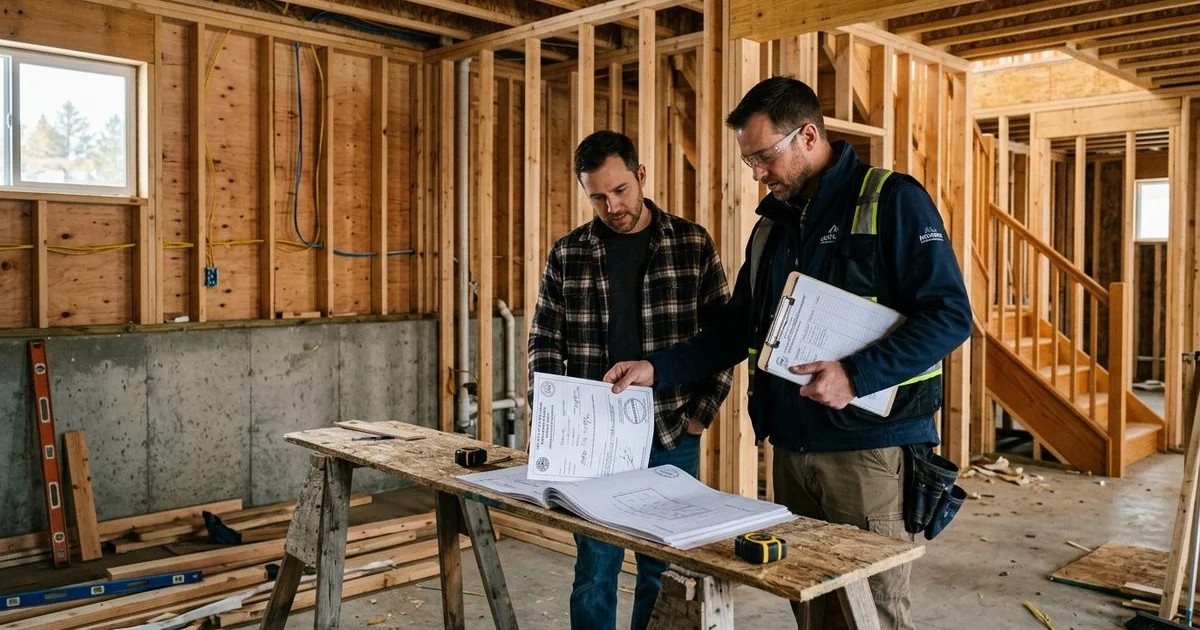
The short answer: yes, you need a basement finishing permit in Arvada
We hear this question from homeowners across Greater Denver almost daily.
Securing a basement finishing permit in Arvada is legally required if you are changing an unfinished area into a habitable space. This legal paperwork separates a profitable home upgrade from a massive future headache.
Our experts know exactly how to handle the City of Arvada Building Safety division, and you will need to pull a Residential Interior permit for almost any basement finishing project. If your plans involve any of the following tasks, municipal approval is mandatory:
- Framing new walls or altering structural supports
- Adding or modifying electrical circuits
- Adding or modifying plumbing lines
- Cutting the foundation for a new egress window
- Adding HVAC supply vents, return vents, or new equipment
- Installing a wet bar, kitchenette, or bathroom
These regulations are not just formalities. Whether you need an Arvada city approval or a basement permit in Jefferson County, officials use this process to verify that all construction meets the 2024 International Residential Code (IRC).
Our firm handles this entire submission process for you. Compliance guarantees your family stays safe and your property value actually increases.
What inspectors actually check
Inspectors check your project at five specific stages to ensure full compliance with structural and safety codes. A typical basement finish in Arvada moves through these mandatory evaluations before the final sign-off.
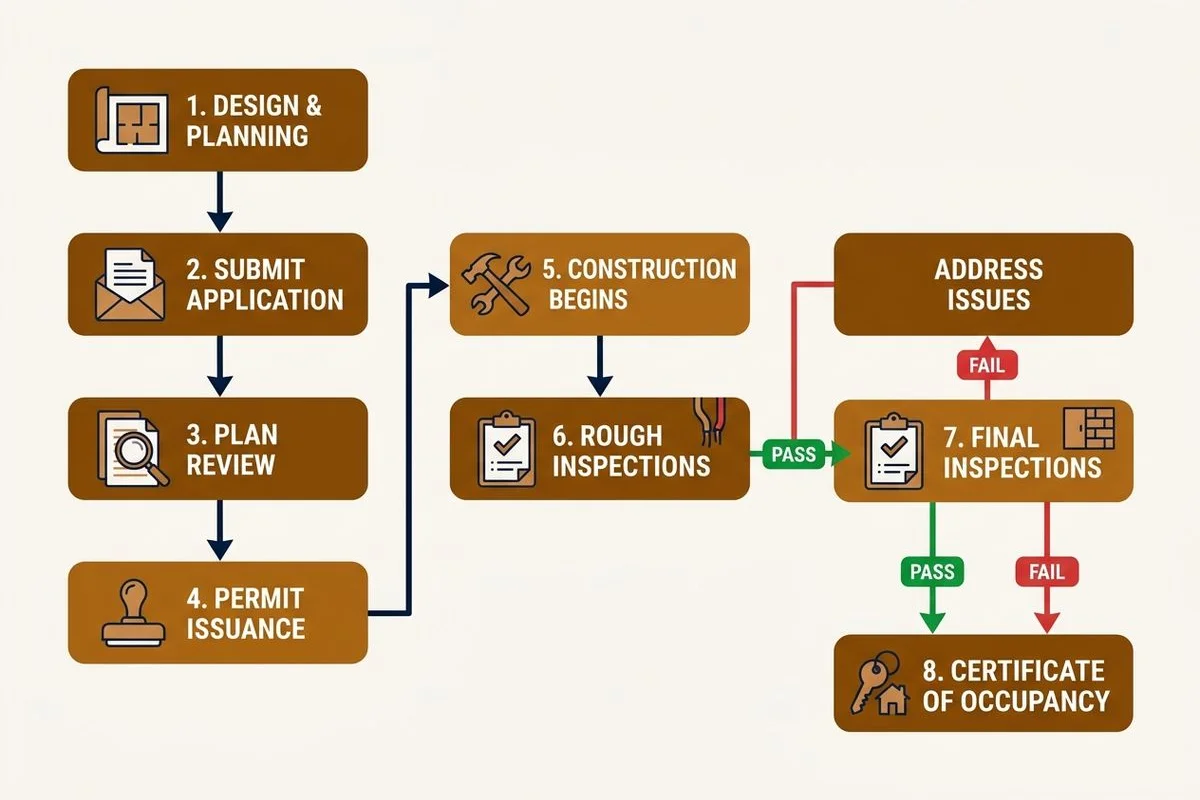
Our field crews prepare extensively for every single site visit. The city requires these five distinct checkpoints:
- Framing inspection. After framing is complete but before insulation or drywall goes up, an inspector verifies floating wall details, fire blocking, header sizing, and any structural changes.
- Electrical rough inspection. Wiring runs are exposed and inspected for box fill, GFCI placement, AFCI circuits, and proper grounding before drywall closes the walls.
- Plumbing rough inspection. Drain, waste, and vent lines, plus water supply pipes, are pressure-tested and visually inspected before being closed in.
- Mechanical inspection. HVAC ducts, dryer vents, and any new equipment are scrutinized for proper installation, structural support, and adequate combustion air.
- Final inspection. Once all finishes are complete, an inspector returns for a final walk-through verifying egress safety, smoke and CO detectors, GFCI receptacles, handrails, and overall code compliance.
We schedule, attend, and pass every inspection as a core part of our fixed-price contract.
Pro Tip: Arvada officials are strict about bathroom clearances. The local code mandates a minimum ceiling height of 6 feet 8 inches specifically above the showerhead area.
Our project managers double-check every fire block and electrical circuit before the official arrives. This proactive approach prevents costly delays and keeps your remodeling timeline on track.
What you’re actually paying for in permits
You are paying for municipal plan review, essential site inspections, and the permanent Certificate of Occupancy. Arvada permit fees for a typical basement finish run between $800 and $2,000 depending on the scope and total valuation.
Our design team includes the submission work and administrative heavy lifting in our primary contract. The municipal fee itself covers the official documentation proving your new space meets all safety standards.
The exact price tag depends heavily on your project’s square footage. As of 2026, the City of Arvada calculates unfinished basement additions using a specific formula.
| Cost Component | Arvada Fee Structure |
|---|---|
| Base Valuation | Calculated at roughly $31.50 per square foot |
| Typical Total Permit Cost | $800 to $2,000+ |
| City Plan Review | Included in the base fee |
| Material/Labor Split | 58% materials and 42% labor for use tax |
We handle the permit cost estimates during your initial design phase. Property owners who try to bypass this step often face severe financial consequences later.
Trading a $1,500 fee today for a massive appraisal problem tomorrow is never a smart financial decision.
What happens at resale without a permit
Selling a home with an unpermitted basement causes appraisal shortages, failed buyer inspections, and sudden lender denials. Three major hurdles derail transactions when unpermitted living spaces are discovered.
Our real estate partners constantly see sellers lose money because of unauthorized construction. You must understand how the local market penalizes undocumented renovations.
Here is exactly what goes wrong at resale:
- Appraisal exclusions. Most appraisers will not include unpermitted finished square footage in the home’s official livable area. You might have a beautiful basement, but it will not show up on the appraisal. You literally cannot price the home for what you built.
- Inspection disclosures. A competent home inspector will flag unpermitted work in their official report. Buyers instantly use that leverage to renegotiate the price or walk away completely.
- Insurance and lender issues. Lenders frequently require unpermitted sections to be opened up or permitted retroactively before authorizing a closing. Insurance carriers often refuse to cover damage originating in unauthorized finished spaces.
We protect your investment by managing the entire legal process from day one. Creating a legal bedroom requires strict adherence to local building standards.
Egress codes make or break your bedroom addition
Adding a basement bedroom in Jefferson County triggers immediate life-safety regulations. The 2024 IRC guidelines enforce strict dimensions for any emergency escape window.
Our installation crews guarantee that your space meets all three critical baseline measurements:
- A minimum net clear opening of 5.7 square feet
- A maximum sill height of 44 inches from the finished floor
- A minimum of 9 square feet of horizontal clearance for exterior window wells
You must install a permanent ladder if that window well is deeper than 44 inches. Get the egress window requirements right the first time, and the finished basement adds real value forever.
We handle every single step of this process to ensure your investment is secure. Call our team today to secure your basement finishing permit in Arvada and start your home transformation.
Your dream basement is just a phone call away.
Frequently Asked Questions
Do I really need a permit to finish a basement?
What happens if a basement was finished without a permit?
Can you pull permits for me?
More Guides in This Series
Basement Egress Window Requirements in Arvada
Egress windows are required for legal basement bedrooms in Arvada. Learn the size, well and ladder code, retrofit cost and why it matters for safety.
What Does It Cost to Finish a Basement in Arvada?
Real Arvada basement finishing costs by size and finish level, plus what a bathroom, egress and wet bar add. See what's included in a fixed-price quote.
Wet Basement Solutions and Waterproofing Before Finishing
Got a damp basement? Learn the common moisture causes, waterproofing and drainage fixes, and why water must be solved before finishing — plus radon notes.
Learn more about Basement Finishing & Remodeling
Ready to talk through your specific project? We'll meet you at home and walk through realistic budget and timeline ranges.