What Is a Pop-Top Addition?
A pop-top adds a second story to a single-story home. Learn why it's common on Front Range ranches, the high-level process and who it's for.
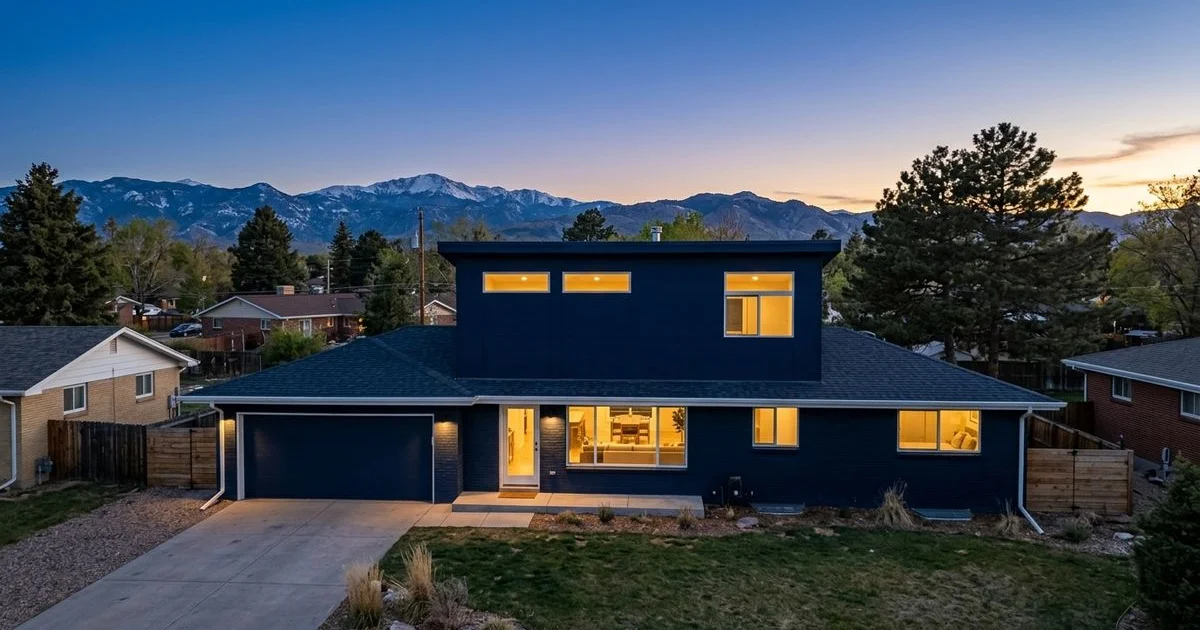
You know how quickly a starter home can feel cramped once your family starts growing. We hear this exact frustration from homeowners across the Front Range every single week. Relocating feels like the obvious answer, but the current Denver real estate market makes upgrading incredibly expensive.
That is why pop-top additions have become the smartest strategy for maximizing your property.
Let’s answer the core question of what is a pop top addition, explore what the numbers look like in 2026, and help determine if your house is a good candidate.
The simple definition: What is a pop top addition?
A pop-top is a complete home remodeling project where a single-story property receives a full second story. We essentially remove the original roof, reinforce the existing first-floor walls, and frame a brand-new upper level before capping it with a new roof. This process permanently transforms a cramped ranch into a spacious, two-story home.
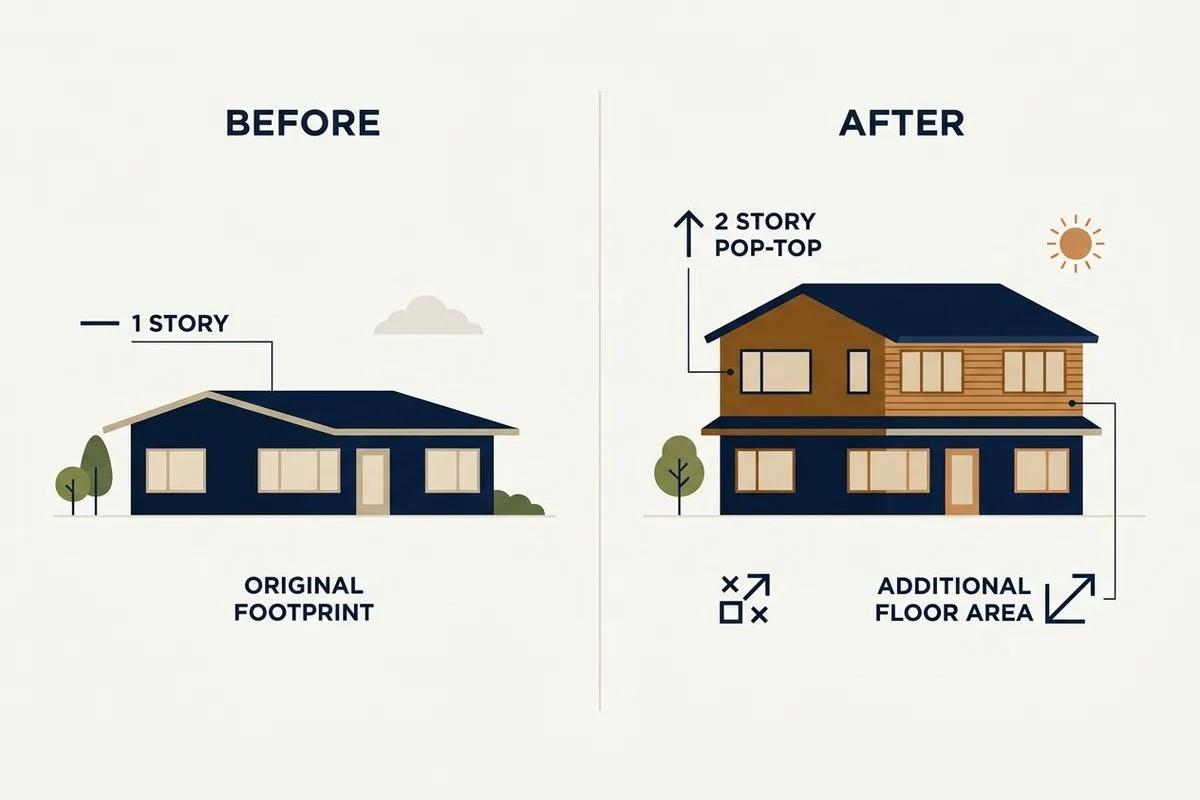
These vertical expansions are incredibly common across the Denver metro because many ranch homes sit on restricted lots. These properties simply cannot expand outward due to strict zoning rules. Adding a second level solves this problem brilliantly.
Understanding the Structural Requirements
Going vertical is a major undertaking that requires careful engineering. Our first step is always bringing in a Colorado-licensed structural engineer to evaluate the existing foundation. Many homes built between the 1950s and 1970s need significant reinforcement to handle the extra weight.
Colorado is known for having expansive clay soil, specifically Bentonite, which puts immense pressure on older foundations. We often need to add steel beams, upgrade headers, or perform foundation underpinning before we can safely build upward. This structural engineering phase typically costs between $5,000 and $15,000, but it guarantees your new second story is completely safe and up to the 2026 residential building codes.
Why pop-tops are everywhere in the Front Range
Arvada, Wheat Ridge, Lakewood, and large swaths of Denver were primarily developed as single-story ranch communities between the 1950s and 1970s. The average lot size in these neighborhoods ranges from 7,000 to 9,000 square feet, which is modest but certainly not tiny. The homes themselves usually offer 1,200 to 1,600 square feet of living space. That footprint is perfectly fine for a couple, but it quickly becomes tight for a growing family.
When you need more room, the standard options often present major hurdles:
- Move: Relocating is wildly expensive in the 2026 market, and trading up often means taking on a much higher mortgage rate.
- Build out: Expanding your footprint is often impossible due to strict city setbacks, like Arvada’s common 5-foot side yard and 10-foot rear yard restrictions.
- Build down: Finishing a basement adds square footage, but you sacrifice natural light and daytime windows for your bedrooms.
- Build up: A second story pop top gives you exactly what you need without sacrificing your backyard.
We recommend the vertical approach because it is the only path that adds full above-grade square footage while maintaining your home’s original footprint. Building upward keeps you comfortably within local lot coverage limits. That specific advantage is exactly why a pop top Denver project is more popular than almost any other major renovation.
The Financial Advantage of Staying Put
Moving involves sunk costs like 5% to 6% in realtor commissions, plus thousands in closing costs and relocation expenses. We consistently see that investing those funds into your current property yields a much better return. Let us compare the financial realities of moving versus adding on in the 2026 Denver market.
| Financial Factor | Selling & Moving | Building Up (Pop-Top) |
|---|---|---|
| Sunk Costs | 6% Realtor fees, closing costs, moving trucks | None (Investment goes directly into your asset) |
| Interest Rates | Subject to new, often higher 2026 mortgage rates | Keep your existing low-rate mortgage |
| Return on Investment | 0% on transaction fees | 65% to 80% ROI on added square footage |
In fact, a full second-story addition that includes new bedrooms and a primary bathroom will permanently push your property into a higher appraisal tier.
The high-level process
A major residential project like this requires careful planning and a structured timeline. We have refined our workflow over the years to keep these massive renovations as predictable as possible. Here is a breakdown of the exact sequence of events you can expect.
Phase 1: Planning and Approvals
Proper preparation prevents costly delays once construction begins.
- Initial consultation: Our team walks through your home, evaluates the foundation, and discusses your specific goals.
- Structural engineering: A Colorado-licensed engineer formally evaluates the load path and sizes the new structural beams required for the second floor.
- Architectural design: The plans include exterior tie-ins so the new story looks completely original, along with interior layouts and 3D renderings.
- Permit submission: The paperwork goes to the City of Arvada or Jefferson County Community Development for a thorough review.
- Permit issued: This administrative phase typically takes anywhere from 4 to 8 weeks, depending on the current backlog at the building department.
Phase 2: Active Construction
Once the permits clear, the physical transformation of your property begins.
- Construction starts: Crews handle the interior demolition and install the necessary structural reinforcement before tearing off the old roof.
- Framing and dry-in: This is the most critical 10 to 14 day window when your home is exposed to the elements.
- Weather monitoring: We constantly monitor Colorado’s unpredictable weather patterns during this phase to prevent moisture damage.
- Roughs and inspections: Licensed tradespeople install the new electrical wiring, plumbing lines, and mechanical systems before passing city framing inspections.
- Interior finishing: The space takes shape with high-quality insulation, drywall installation, custom trim work, fresh paint, and new flooring.
- Final inspection: The city inspector issues the final certificate of occupancy, officially making your new space ready to enjoy.
You should anticipate a total timeline of 5 to 8 months for active on-site construction. The initial design and permitting work requires an additional 2 to 3 months before a hammer ever swings.
Who pop-tops are for
A pop-top addition is a massive undertaking, so it is crucial to determine if your property is the right fit. We typically tell homeowners that this project is perfect for specific scenarios but completely wrong for others. Making the right choice comes down to your long-term goals and your current property constraints.
The Ideal Candidates
Going vertical makes the most financial and practical sense under these specific conditions.
- You own a ranch home on a restricted lot. If you cannot expand outward due to zoning rules or a small yard, building up is your best option.
- You need substantial square footage. This project is ideal when you want to add 800 to 1,400 square feet for real second-story space like a primary suite and extra bedrooms.
- Your foundation is viable. Most 1950s and 1960s foundations can carry the additional load once proper structural reinforcements are installed.
- You love your current location. If your neighborhood has great schools and nearby amenities, staying put is usually preferable to starting over somewhere else.
- The math works in your favor. In the current Denver market, adding on frequently beats the exorbitant costs of moving to a larger, completely updated home.
When to Consider Alternatives
A full second story pop top does not make sense for everyone.
- Your home already has a second floor. You should consider a traditional ground-level addition or a dormer expansion instead.
- The foundation requires catastrophic repairs. If the structural engineer finds severe degradation that costs tens of thousands of dollars just to stabilize, the project will not pencil out.
- You only need a tiny amount of space. If you just want an extra 200 to 400 square feet for a home office, a smaller ground-level bump-out or a basement finish is significantly cheaper.
- You plan to sell very soon. You will not recover the full construction cost if you list the property within 24 months of completion.
What it adds
The transformation of your living space goes far beyond just gaining a few extra rooms. We help homeowners completely reimagine how their families flow through the house every single day. A typical Arvada pop-top completely redefines your property’s functionality and market value.
Here is exactly what you can expect to gain from a full vertical expansion:
- Massive square footage: You instantly add 800 to 1,400 square feet of dedicated second-floor space.
- A true primary suite: You finally get a private retreat with a large walk-in closet and a modern en suite bathroom.
- Extra sleeping quarters: The layout easily accommodates 2 to 3 new bedrooms for children or guests.
- Dedicated bathroom access: You can include 1 to 2 new bathrooms, ending the morning fight for the shower.
- Upstairs laundry: This feature places the washer and dryer right next to the bedrooms, saving you countless trips down the stairs.
- Enhanced sightlines: Building up frequently unlocks gorgeous mountain views that were previously blocked by neighboring roofs.
Analyzing the Investment
The financial benefits are just as impressive as the lifestyle upgrades. Second-story additions currently cost an average of $250 to $400 per square foot in the 2026 Denver market. Our internal data shows that adding highly coveted bedrooms and bathrooms creates a significant boost in your total property value. By keeping your yard intact while doubling your living area, your home jumps into a much higher pricing tier for future appraisals.
What’s next
Understanding what is a pop top addition is just the first phase of your remodeling journey. If you are considering a major vertical expansion on an Arvada ranch, the right next step is scheduling a free in-home consultation.
Our specialists will visit your property to look at your specific home and carefully evaluate the existing foundation. This initial meeting provides you with an honest assessment of whether a project is physically feasible.
We will give you a realistic estimate of what it would likely cost in today’s market, ensuring you have all the facts before making a decision. Reach out to the team today to start planning your dream space.
Frequently Asked Questions
What is a pop-top addition?
Why are pop-tops popular in Denver?
How long does a pop-top take?
More Guides in This Series
How Much Does a Pop-Top Addition Cost in Arvada?
Pop-top additions in Arvada typically run $150k-$350k+. See the cost drivers, why they cost more than a basement finish and financing options.
Adding a Second Story to a 1950s-1970s Arvada Ranch Home
Thinking of popping the top on a mid-century Arvada ranch? Learn what's feasible, the foundation and load-path evaluation, timeline and living arrangements.
Learn more about Pop-Top (Second Story) Additions
Ready to talk through your specific project? We'll meet you at home and walk through realistic budget and timeline ranges.