Do You Need a Permit to Remodel a Kitchen in Arvada?
Cosmetic kitchen updates rarely need a permit, but electrical, plumbing relocation and structural work do. Here's what triggers a permit in Arvada.
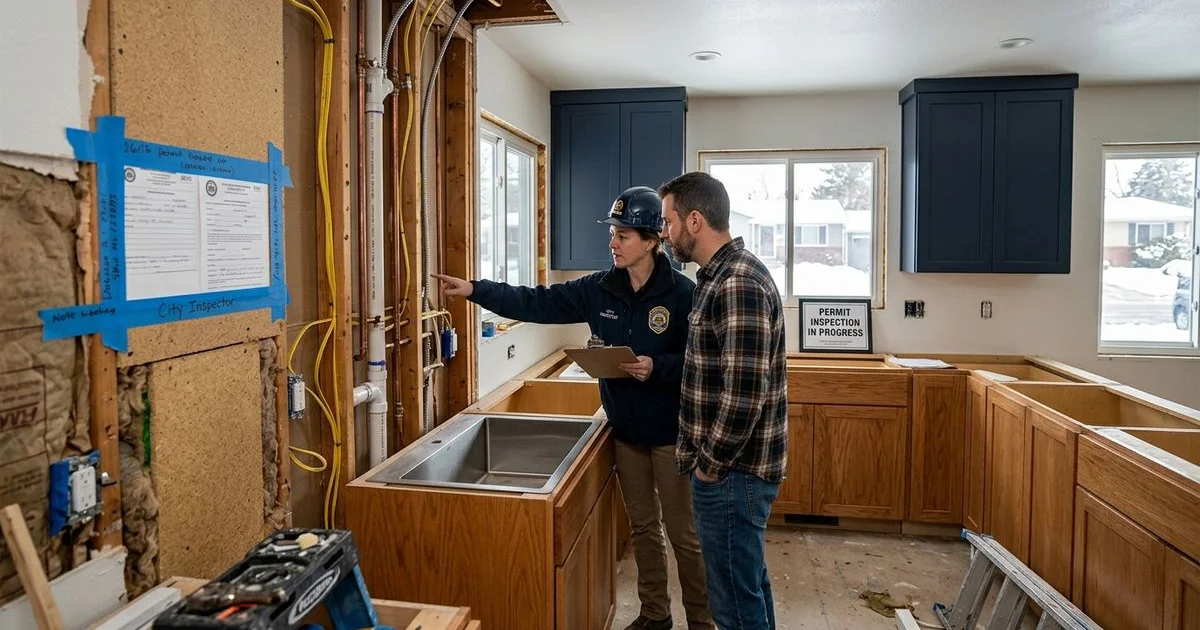
We have watched the Greater Denver area grow at a record pace. Homeowners constantly ask us about the specific rules for a kitchen remodel permit Arvada requires. Finding a clear answer to “do I need a permit kitchen” is the critical first step to adding living space safely.
Our team understands that pulling a kitchen permit Jefferson County mandates feels overwhelming at first. Most real kitchen remodels cross at least one threshold requiring city approval. Here is the exact roadmap for your project.
When you need a kitchen remodel permit Arvada requires
We always tell clients that a permit is mandatory whenever work touches structural elements, electrical wiring, plumbing piping, or mechanical systems. The City of Arvada currently enforces the 2018 International Residential Code for these updates. Base permit fees usually range from $300 to $1,000, plus a 3.46% city use tax on construction materials.
Our experts review these local codes daily to ensure complete compliance.
The graphic below highlights the most common triggers for city review. Knowing these triggers prevents costly delays during your renovation.
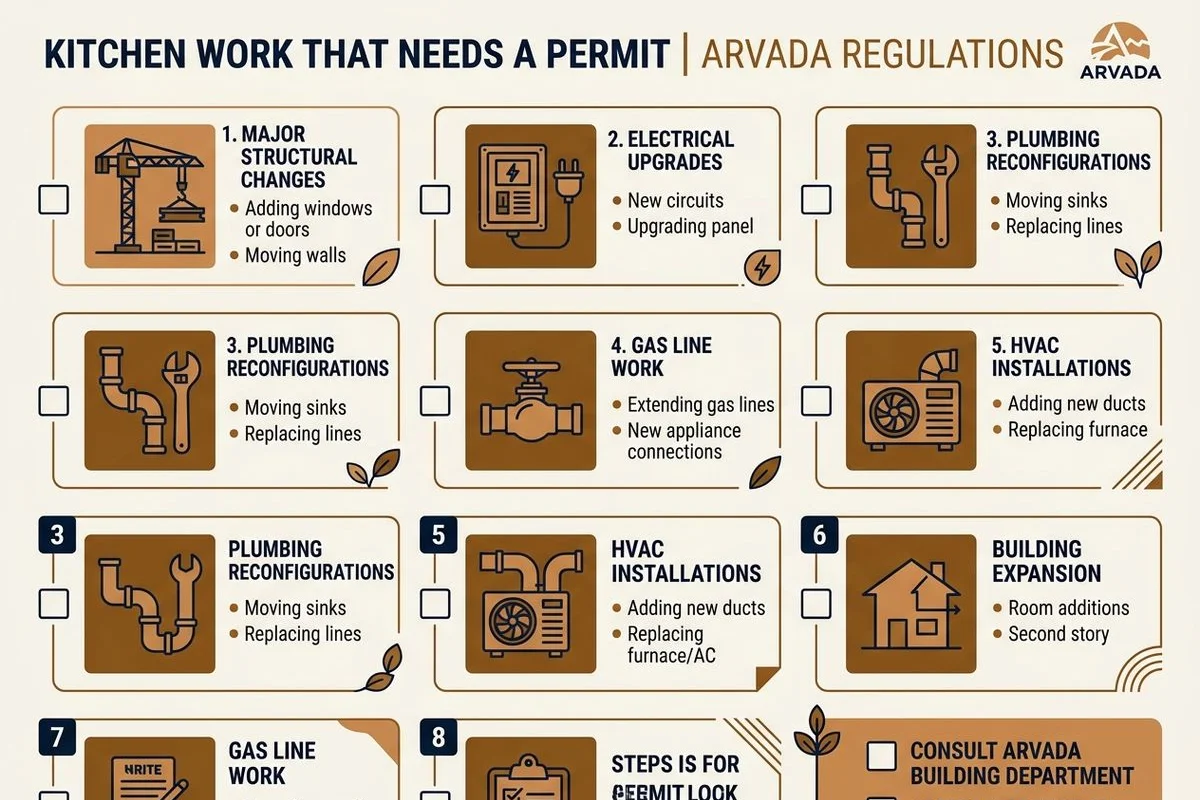
Permit required:
We handle all the paperwork when your design crosses these specific lines. The building department demands oversight for major structural and utility changes. This ensures your home remains safe and up to current fire codes.
- Adding or relocating electrical circuits or outlets
- Adding or relocating plumbing supply or drain lines
- Installing or relocating a gas line
- Removing or modifying a load-bearing wall
- Adding a structural island that ties into floor framing
Our initial walk-through will identify any of these additional requirements.
Exterior-vented range hoods and enlarged doorway modifications also mandate official approval. Inspectors pay special attention to these system upgrades.
- Cutting in a new window or door
- Changing the venting path for a range hood
- Installing a new electrical panel or sub-panel
- Adding a wet bar with a sink
Permit usually not required:
We love helping homeowners maximize their space with cosmetic updates. Surface-level cosmetic changes skip the municipal review process entirely. You save time by focusing on these direct improvements.
- Painting walls and cabinets
- Replacing cabinet doors and hardware
- Refacing existing cabinets in place
- Replacing counters in the same footprint
Our design partners often recommend these updates for a fast refresh.
Swapping out fixtures in their existing spots keeps you in the clear. The line between needing a review and proceeding freely is often just a matter of location.
- Replacing a sink in the same location
- Replacing flooring
- Replacing a range or refrigerator in the same spot
- Installing a backsplash
- Replacing light fixtures with the same configuration
We always verify the specifics, like replacing a dishwasher in place versus adding a brand new one. Adding new appliances requires new electrical and plumbing connections. Simple swaps like replacing an over-the-range microwave rarely trigger a review.
The inspection sequence for a kitchen remodel
We schedule between two and four site visits depending on the final scope of your project. City inspectors typically operate between 8:00 AM and 4:00 PM on weekdays. Contractors must request these visits via the city portal with a 24-hour notice.
Our project managers coordinate these steps so you never have to wait around.
Passing each phase keeps the construction timeline moving smoothly. The table below outlines exactly what officials check during each visit.
| Inspection Phase | City Code Focus | What Gets Checked |
|---|---|---|
| 1. Electrical Rough | Code 403 Review | Wiring runs, junction box placement, and AFCI/GFCI circuits inspected before drywall closes the walls. |
| 2. Plumbing Rough | Code 303 Review | Drain, waste, vent, and water supply lines pressure-tested to ensure zero leaks. |
| 3. Mechanical Rough | Code 503 Review | Exterior-vented range hoods, gas line pressure testing, and HVAC system modifications. |
| 4. Final Building | Code 700 Review | Finishes complete, appliances installed, and GFCI receptacles tested. |
We prepare the job site carefully before the official arrives. A common surprise for local residents is the strict requirement for home-wide smoke and carbon monoxide detectors. The inspector will verify these safety devices are present and operational in every bedroom and hallway.
Why “skip the permit” is bad math
We strongly advise against listening to contractors who promise to save you the fee by ignoring the rules. Colorado real estate agents estimate that up to 40% of homes contain some unpermitted work. Discovering these shortcuts during a home sale creates massive headaches and financial losses.
Our dedication to transparent pricing means doing things right the first time.
Skipping this process carries severe long-term risks. Here is a breakdown of the specific dangers you face.
- At resale, unpermitted work shows up during the buyer’s inspection and requires retroactive approval with double fees.
- At appraisal, newly finished square footage might not count toward the official home value.
- For insurance, policies frequently deny coverage for fire or water damage caused by unauthorized plumbing or wiring.
- For safety, catching a gas line error before it becomes a hazard is the primary purpose of these municipal reviews.
We consider the $300 to $1,000 city fee to be the most affordable insurance you will buy for the entire project, and it is a small slice of the overall Arvada kitchen remodel cost. Paying this upfront cost secures the legal status and safety of your investment. Peace of mind is worth far more than a slight initial discount.
We handle all of it
We include the full municipal submission and all city fees in every single kitchen remodel contract. Managing the automated phone codes, online portals, and site meetings requires constant attention. You never have to talk to the building department directly.
Our dedicated staff schedules every inspection and meets the official on site.
Talk to our team about your ideas today. A quick consultation will ensure you get the exact kitchen remodel permit Arvada codes require for your project.
Frequently Asked Questions
Do I need a permit to remodel my kitchen?
Who pulls the permit?
How long does the permit process take?
More Guides in This Series
Cabinet Refacing vs. Replacement: Which Is Right for You?
Refacing saves money and time; replacement lets you change layout. Compare cost, durability and look to choose the right option for your kitchen.
How Much Does a Kitchen Remodel Cost in Arvada?
Arvada kitchen remodel costs by scope — minor update vs full gut. See the price drivers (cabinets, counters, layout) and budget guidance.
Small Kitchen Remodel Ideas for Arvada Ranch Homes
Maximize a compact ranch-home kitchen in Arvada with smart layout, storage and lighting ideas — plus a realistic small-kitchen budget.
Learn more about Kitchen Remodeling
Ready to talk through your specific project? We'll meet you at home and walk through realistic budget and timeline ranges.