Can You Live in Your House During a Whole-Home Renovation?
Stay or move out during a whole-home renovation? Weigh the dust, utility and timeline realities and how phasing keeps your home livable.
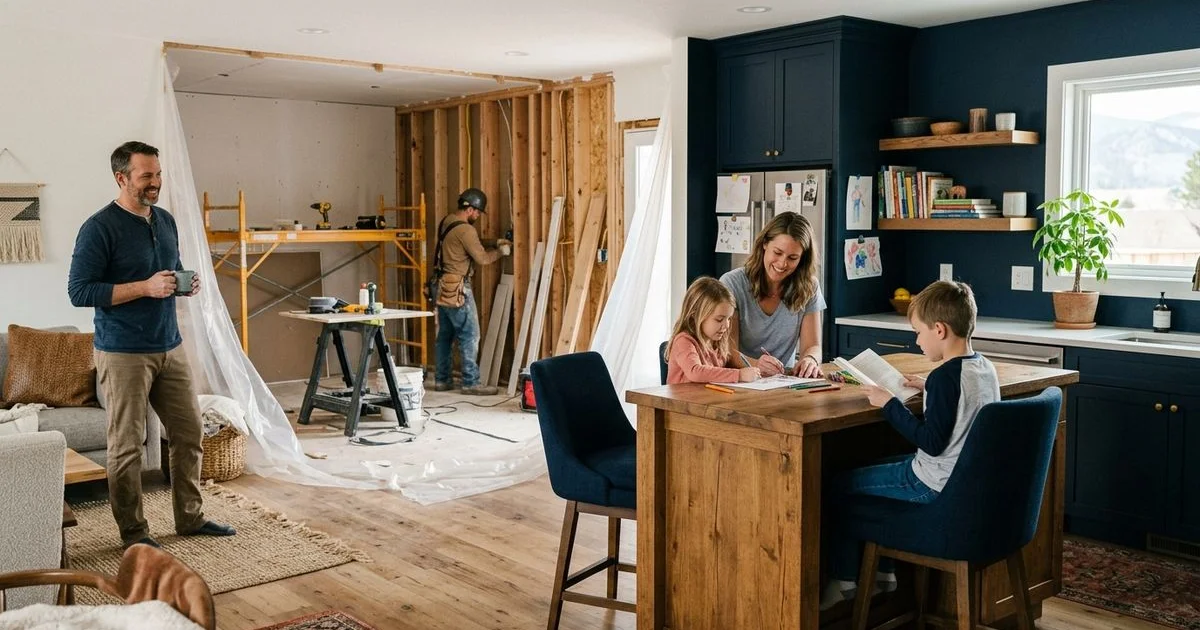
The honest answer: it depends on your tolerance
We hear homeowners throughout the Greater Denver area ask about the realities of living through home renovation every single week at Arvada Remodeling Pros. You can technically remain on site for the duration of most projects. The honest answer about whether you should stay depends on three factors.
We look at how the work is phased, your tolerance for disruption, and your access to a working kitchen and bath. This decision changes the entire rhythm of your daily life.
Our team maps this timeline out with every homeowner before signing a contract. Here is the exact framework to help you decide.
It all comes down to your personal comfort zone.
What’s livable, what’s not, by phase
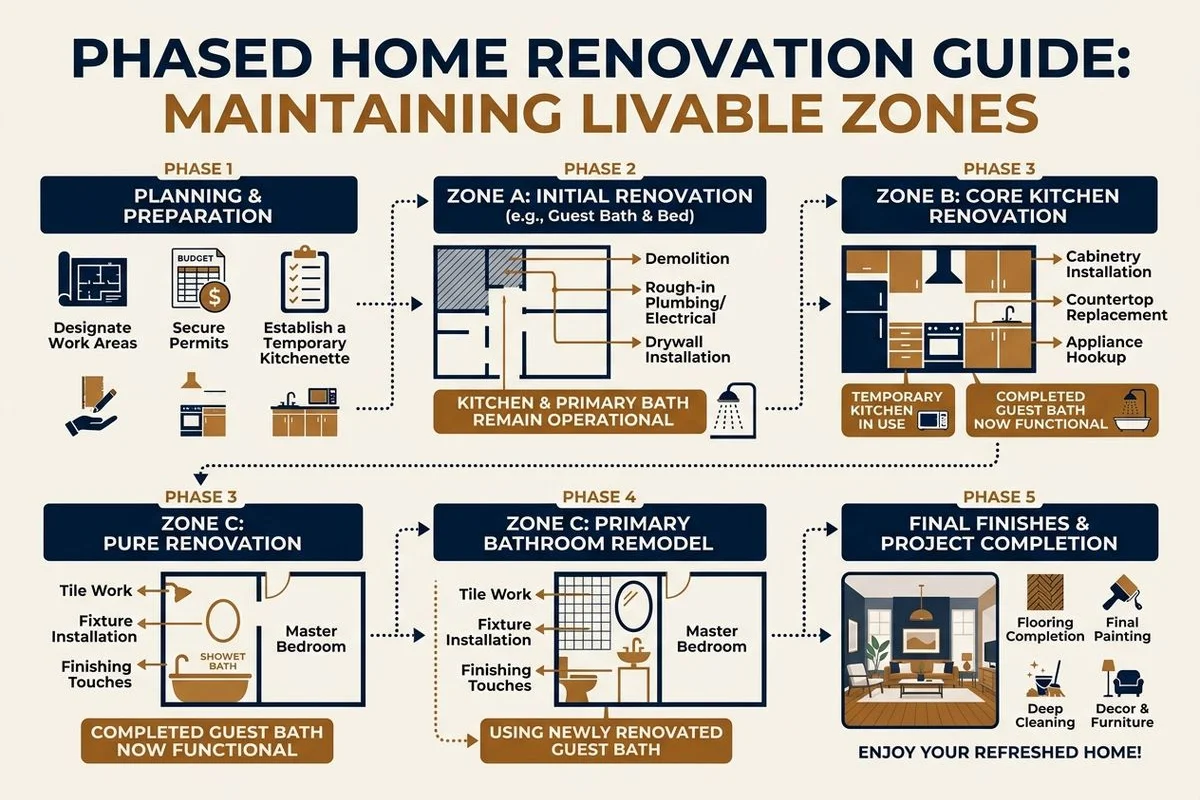
We break down a typical 3 to 6 month project into specific stages. Each step carries a different level of noise and dust. Knowing what to expect makes the process much easier.
Our project managers use the following schedule to keep parts of your house functional.
| Phase | Timeline | Livability Status |
|---|---|---|
| 1. Pre-construction | 1 to 2 weeks | Fully livable. Material delivery and dumpster placement cause mild inconvenience. |
| 2. Kitchen demo and rough-in | 2 to 3 weeks | Barely livable. The kitchen is completely unusable. Relocation or a temporary setup is required. |
| 3. Bathroom demo and rough-in | 2 to 4 weeks per bath | Partially livable. We sequence multiple baths so one works. Single-bath homes require relocation. |
| 4. Drywall and finish work | 4 to 8 weeks | Livable but dusty. Most home function is preserved during this noisy stage. |
| 5. Tile, flooring and paint | 3 to 5 weeks | Generally livable. Specific rooms are blocked off while finishes dry. |
| 6. Final finishes and cleanup | 2 weeks | Fully livable. You will simply walk through a completed home in stages. |
Managing the Dust Factor
We take extra precautions during the drywall phase because Colorado has a very dry climate. Dry air allows fine particles to travel much farther and linger longer.
Our crews deploy professional HEPA air scrubbers, like the BuildClean 360-degree system, to manage this. These commercial units capture up to 90 percent of airborne dust before it settles on your furniture.
The kitchen problem
Our experience shows the kitchen is the part of a whole-home renovation that most commonly forces a temporary move. Daily life gets hard fast without a working sink, range, or refrigerator.
You will need a solid plan for feeding your family.
Three Common Workarounds
We typically see families choose one of three paths to survive a kitchen remodel. Each option requires a different budget and tolerance for stress.
- Set up a temporary kitchen. We can arrange a working area with a utility sink, a microwave, an electric burner, and a refrigerator. This setup works well in a basement, garage, or laundry room for a few weeks.
- Eat out and meal-prep. You can plan for 3 to 4 weeks of restaurant visits and pre-made meals. A mid-range restaurant meal for a family in Denver easily averages over $100 in 2026. This adds a significant cost of $800 to $2,000 per week, but you avoid moving out.
- Relocate temporarily. Securing a short-term rental or staying with family removes you from the chaos. This option completely eliminates the noise and cooking limitations.
The bathroom problem
We know that single-bathroom homes face the biggest hurdle during a remodel. Two-bath homes can usually keep one functional throughout the project. Three-plus bath homes have absolutely no issue staying livable.
You have a few distinct choices if your home only has one bathroom.
- Install a portable shower. Setting up a temporary portable shower unit in a basement or garage is more feasible than it sounds.
- Plan a brief relocation. You can leave the house during the specific window when no bathroom is functional. This blackout period typically lasts just 1 to 2 weeks.
- Book a local hotel. Renting a nearby motel or hotel room strictly for showering is a popular hybrid solution.
Does moving out speed things up?
Our tracking data shows that working in an empty home shaves 15 to 25 percent off the timeline of a typical project. Saving 20 percent on a four-month schedule means finishing three weeks earlier.
Contractors simply move faster when they do not have to work around daily life.
Why Empty Homes Finish Faster
We achieve these faster finish times for a few very specific reasons. Removing the daily reset requirements allows the crew to focus purely on construction.
- Crews can demolish multiple rooms simultaneously instead of sequencing them one by one.
- Workers do not need to clean and contain dust as aggressively at the end of every single day.
- Material staging and heavy tool storage become much easier and safer.
- Trade professionals can start earlier each morning without worrying about waking up the household.
- Less coordination is needed around your family schedules and work-from-home meetings.
Our advice is simple. An empty home is the faster and cleaner option if you have the budget for it.
What we’d recommend
Your final stay or move out renovation decision always depends on the specific dynamics of your household.
You have to weigh the financial cost of moving against the mental cost of staying, on top of the broader whole-home renovation cost in Arvada. Several key factors will tip the scale one way or the other.
- Family size and ages. Young children and pets make living in a construction zone much harder.
- Work-from-home requirements. Constant noise and internet interruptions are real disruptions to video meetings.
- Health considerations. Anyone with asthma, allergies, or respiratory issues must leave during the demolition and drywall phases.
- Budget for the alternative. A furnished, family-sized short-term rental in Arvada averages between $2,300 and $5,000 per month in 2026.
We recommend a hybrid approach for most local families. You can stay in the house during the lower-disruption phases, then relocate just for the kitchen demolition and cabinet installation.
Leaving for those 3 to 4 weeks typically costs less than a full-project rental and preserves most of your normal routine.
Talk to our team about your specific project today. We will walk through realistic livability expectations for your home.
Frequently Asked Questions
Can I stay in my home during a full renovation?
Does moving out speed up the project?
How dusty does it really get?
Learn more about Whole-Home Renovation
Ready to talk through your specific project? We'll meet you at home and walk through realistic budget and timeline ranges.